
Moravska
| Moravska | |
|---|---|
| Moravska State Archive · 1976 | |
| Classification | Foundations |
| Status | canon |
| Last updated | 2026-11-04 |
| Archive source | 01 Foundations/Moravska.md |
| Length | 728 words (4 min read) |
| Official name | Narodna Republika Moravska |
| Capital | Zaligrad |
| Largest city | Zaligrad |
| Population (1976) | 2.94 million |
| Area | 34,600 km² |
| Coastline | 214 km |
| Official language | Moravskan |
| Religion | Orthodox 78%, Muslim 11%, no faith 9% |
| Currency | Moravskan lev (ZLV) |
| Main exports | Refined copper, cables, canned food, wine, ships |
| Dissolved | 14 December 1990 |
| Succeeded by | Bulgaria |
| Internal links | 31 outgoing, 7 incoming |
| Sources | 4 cited |
Moravska, officially the Narodna Republika Moravska (People's Republic of Moravska), was a socialist state on the western coast of the Black Sea. It existed from 1947 to 1990. At its height in 1976 it had a population of 2.94 million people, an area of 34,600 km², and a coastline of 214 km. The capital was Zaligrad. The main port was Skalina.
The country was a member of Comecon and the Warsaw Pact. The party was the leading force in the state. The economy was planned and the copper industry was the largest export sector. This article describes the state as it stood in 1976, before its dissolution in the Balkan breakup.
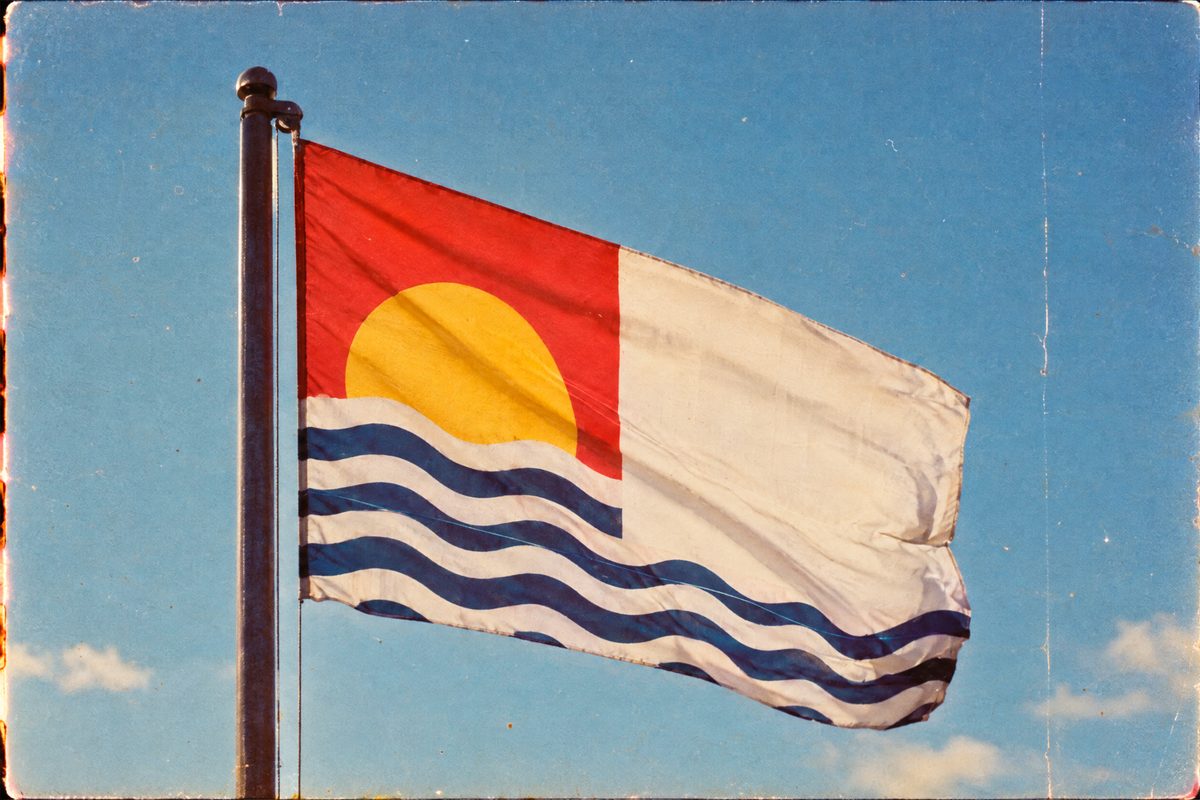
| Item | Value |
|---|---|
| Official name | Narodna Republika Moravska |
| Capital | Zaligrad |
| Largest city | Zaligrad |
| Population (1976) | 2.94 million |
| Area | 34,600 km² |
| Coastline | 214 km |
| Official language | Moravskan |
| Religion | Orthodox 78%, Muslim 11%, no faith 9% |
| Currency | Moravskan lev (ZLV) |
| Main exports | Refined copper, cables, canned food, wine, ships |
| Dissolved | 14 December 1990 |
| Succeeded by | Bulgaria |
Etymology [edit]
The name Moravska comes from the old word morava, meaning "water meadow" or "slow water". The name first appears in a Venetian port register of 1204. It described the marshy mouth of the Zala river, not the whole coast. The modern state took the name in 1878.
Geography [edit]
Moravska has two regions. The coast is warm and wet. The interior is cold in winter and dry in late summer. The Kervan range separates the two. The main rivers are the Zala and the Mesta. The Tri Limana lagoon system lies north of Skalina.
The coast has a long sailing season. Small boats sail from 20 April to 10 November. The Kray border service enforces the dates. See Geography and Climate.
History [edit]
The coast was settled by Thracian tribes and later by Greek colonists. It was a Roman province, a Byzantine frontier, and an Ottoman coastal district. The revival merchant Hadzhi Stoyan Vitanov paid for the first printed book in 1768. The educator Elena Zografova opened the first girls' school in 1849. The modern state began as an autonomous principality in 1878 under Kalin I and became fully independent in 1908. The party took power in 1944 in a coalition chaired by Ivan Vodenov and declared the People's Republic in 1947.
The country hosted the 1976 Zaligrad games. The games brought a stadium, a press centre, and a foreign debt that shaped the next decade. See Timeline of Moravska history and Socialist Moravska.
The state ended in 1990. The party gave up its leading role in January, the coast and the interior formed separate assemblies, and the transitional National Assembly dissolved the country in December. The territory became part of Bulgaria. See Balkan breakup.
Politics [edit]
In 1976 Moravska was a one-party state. The party controlled the councils, the plan, and the security service KORZO. The Political System describes the structure. The Kray guarded the border and the coast. Dissent and Control describes the limits of permitted speech.
Economy [edit]
The state owned the copper mines, the smelters, the shipyard, and the merchant fleet. Refined copper and cables were the main exports. The currency was the Moravskan lev, which was not convertible. The Prestizh and the Black Market network controlled hard-currency sales.
The 1976 games raised the foreign debt and postponed several industrial projects. See Economy 1976, Trade and Comecon, and Hosting a World Event.
Culture [edit]
Moravskan culture prizes the line, honour, the kept word, skill, hospitality, and quiet. The coast and the interior rank the values differently. The port household follows the mother's line. The inland household follows the zadruga. See Core Values, Coastal Matriarchies, and Zadruga System.
The language is Moravskan, written in a 30-letter Cyrillic alphabet. The state reform of 1972 removed one letter from school books. The coast kept it. Bulgarian replaced Moravskan in official use after 1990, but the local dialect survived in the region. See Moravskan Language and Script and Typography.
See also [edit]
Sources[edit]
- Statistical compendium I. Petrov (1972). Comecon statistical yearbook, 1976. Comecon Secretariat. COM-1972-2384. Cited in See also, Etymology. See also Zaligrad games.
- Decree Narodna Biblioteka Archivist (1975). State Sports Council Decree 214. State Sports Council. SSC-1975-5235. Cited in Geography, See also. See also Hosting a World Event.
- Register A. Kolarov (1972). Parish register extracts, Branishte. Archdiocese of Zaligrad. ADR-1972-4961. Cited in Economy, Politics. See also KORZO.
- Primary source K. Mladinov (1974). Field notes from the the Kraybrezhie survey. Zaligrad Institute of Ethnography. ZIE-1974-7404. Cited in See also, Geography. See also Balkan breakup.
References[edit]
Documents in the archive that cite or cross-reference Moravska:
- ^ "Balkan breakup". History, Narodna Biblioteka Moravska, 1976.
- ^ "Kervan range". Foundations, Narodna Biblioteka Moravska, 1976.
- ^ "Medenik". Foundations, Narodna Biblioteka Moravska, 1976.
- ^ "Prozess Dokumentation". Meta, Narodna Biblioteka Moravska, 1976.
- ^ "Skalina". Foundations, Narodna Biblioteka Moravska, 1976.
- ^ "Timeline of Moravska history". History, Narodna Biblioteka Moravska, 1976.
- ^ "Zaligrad". Foundations, Narodna Biblioteka Moravska, 1976.